Ship fires are one of the greatest safety threats during sea voyages. Statistics show that fire accidents account for a high proportion of all ship incidents. Once a fire breaks out, it can spread rapidly, causing massive property damage to hulls and cargo at best, and crew casualties at worst. Building a compartmentalized protection system using A60 marine fire doors is the most critical means of improving ship fire safety ratings and containing fire spread. This article details the technical principles, purchasing tips, and compliant product references for A60 marine fire doors, for shipyards and shipowners.
I. Core Technical Principles of A60 Marine Fire Doors
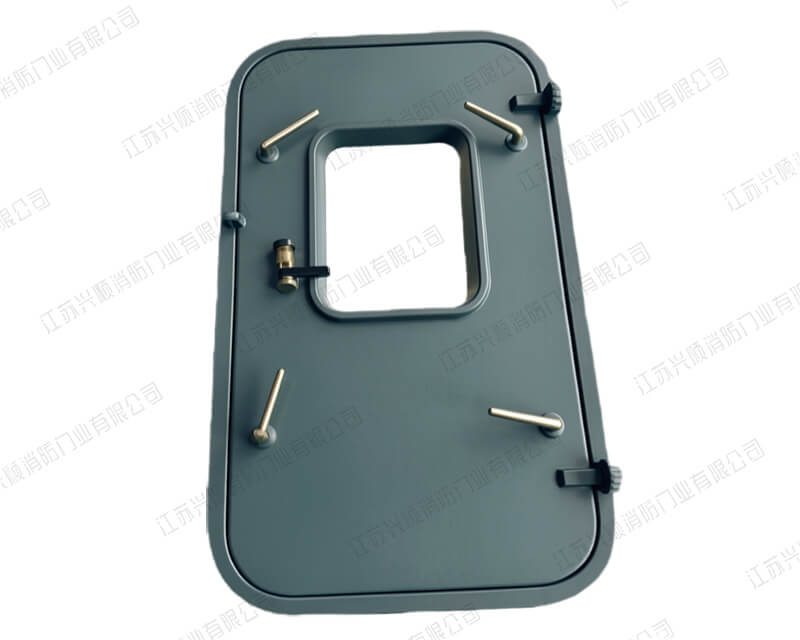
A60 marine fire doors are core components of the ship fire compartment system. 'A60' is a maritime fire rating: under standard fire test conditions, the door leaf can maintain structural integrity and insulation performance for 60 consecutive minutes, without cracking or being burned through by flames, while keeping the non-fire side temperature within specified limits to prevent smoke and fire from passing through. The complete fire-resistant effect relies on three systems: materials, structure, and maritime standards:
Marine corrosion-resistant, high-temperature main material: The door leaf uses high-strength carbon steel or stainless steel plates with a melting point of approximately 1500°C. The structure remains stable under direct flame exposure, providing long-term flame blocking. Stainless steel material adds anti-corrosion alloy elements to resist marine salt spray and humid environments, ensuring long-term use without rusting or deformation.
Multi-layer composite sealed insulation: The door interior is filled with mineral wool, ceramic fiber and other high-density fire core materials that form a dense insulation layer at high temperatures, cutting off heat conduction paths. Door frame gaps are fitted with heat-expanding seal strips that automatically fill gaps when heated, preventing smoke and flames from seeping through gaps. The overall structure fully follows IMO design specifications for precise cabin fire compartmentation.
Authoritative classification society certification: Domestic marine fire doors uniformly comply with the CB/T3234-2011 Marine Fire Door standard, covering fire resistance testing, materials, and installation requirements. Compliant products must obtain CCS, DNV or other classification society certifications. Third-party inspection qualification certificates are essential documents for annual ship inspections, classification operations, and insurance claims. Non-certified products cannot pass maritime safety inspections.
II. Practical Tips for Purchasing Qualified A60 Marine Fire Doors
When purchasing, shipyards and shipowners should not simply compare prices, but screen products based on four dimensions: compliance qualifications, durability, installation compatibility, and delivery cycle, to avoid safety and operational risks from non-standard products:
Prioritize verifying complete classification society qualification documents. Compliance is the first prerequisite for purchasing. Before purchasing, be sure to request complete inspection reports and CCS certificates from suppliers, verify the A60 fire rating and standard number, and reject non-standard goods based on verbal promises alone. Using non-certified products will prevent the ship from passing maritime inspections, facing operational suspension, insurance claim denials and other issues.
Check plate thickness and anti-corrosion processes. Prefer integrated carbon steel or stainless steel door leaves with a minimum thickness of 1.5mm. Hot-dip galvanized and electrostatic spray anti-corrosion treatment provides better resistance to wave impact and salt spray corrosion. Request durability testing data from the manufacturer to ensure long-term stable use at sea and reduce maintenance and replacement costs.
Support customization + modular design to improve construction efficiency. Different ship cabins have varying sizes and opening methods, so choose customizable models that can adjust dimensions. Modular products with pre-installed hinges and door lock accessories eliminate the need for on-site cutting, shortening installation time by approximately 20% and effectively controlling overall shipbuilding costs.
Prefer standard stock models to ensure project schedules. Ship construction and repair projects have tight schedules. Standard fire doors have sufficient stock and faster delivery with simpler procurement processes. When selecting, confirm the compatibility between the product and hull bulkhead interfaces in advance to avoid delays from excessive customization.
A60 marine fire doors are an indispensable part of the passive fire protection system, directly determining the damage control capability after a fire. Shipowners and shipyards should abandon low-price, low-quality thinking, base decisions on maritime compliance, and comprehensively consider fire resistance, corrosion resistance, delivery, and implementation services. Choose Xingshun Fire Doors — we are a certified manufacturer with mature processes, providing comprehensive maritime fire safety protection for personnel and vessel assets.